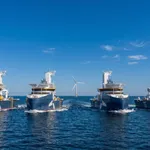
RAD has launched the RAD Autonomy Core, a new product within the RAD Autonomy System designed to make vessels remotely controllable in a simple, reliable, and flexible way.
Built to integrate seamlessly with existing propulsion and onboard systems, the Autonomy Core provides a practical pathway to advanced marine autonomy, without compromising on safety or control.
Operating as an interface layer between vessel engines and onboard systems, the RAD Autonomy Core enables the RAD system to communicate over an IP network. This network can be connected to the internet via satellite, Wi-Fi, or cellular solutions, either through RAD supplied hardware or integration with existing customer infrastructure.
“Autonomy in marine has been overcomplicated for too long,” said Dan Hook, CEO of RAD. “With the Autonomy Core, we’ve focused on what operators actually need: a system that is easy to install, works with what they already have, and guarantees control. This is about making remote operation accessible today, while keeping the door open for more advanced autonomy tomorrow.”
Simple installation, immediate capability The Autonomy Core is designed for rapid deployment and provides the following interfaces:
2 × RAD Bus
1 × DroneCAN (compass/GPS)
1 × External autonomy system via embedded Autonomy Gateway
3 × Ethernet
Operators can easily enable Degree 3 autonomy: fully remote vessel control without onboard crew. The DroneCAN interface supports compass and GPS integration, while the system’s modular design ensures flexibility across a wide range of vessel types and configurations.
Built for interoperability A key feature of the RAD Autonomy Core is its embedded Autonomy Gateway, which enables communication with third party autonomy systems. This allows operators to integrate advanced situational awareness and decision-making tools from external partners, where required. RAD positions its core system as the enabler of remote control, while higher levels of autonomy, e.g. automated decision making, can be layered through partner systems.