Learn from our expert panel at the Seawork Conferences on Wednesday 12 June when one of the hot topics being covered is Battery technology – an opportunity or a challenge for workboats?
This session will look at real-world applications of battery technology – the benefits plus the issues being faced across the sector in adopting this technology.
Hear from: Tidal Transit - Leo Hambro, Co-Founder & Commercial Director will discuss “Marine battery adoption is accelerating rapidly with retrofit and newbuilds across the entire industry. Increases in energy density is allowing the replacement of nearshore and inland waterway diesel guzzlers. The opportunities for carbon reduction are immense and can be truly unlocked with the installation of offshore charging directly from turbines and substations. The benefits easily outweigh any challenges and the Workboat Code 3 sets a good standard for their implementation. Time to Electrify Everything!”
EST-Floattech - Jelle Meindertsma, Sales Manager will highlight through case studies how the maritime type-approved Octopus Series battery systems are delivering positive results in the propulsion of hybrid and fully electric vessels including inland and short-sea shipping, ferries, tugs and push-boats. Jelle stated “Understanding the challenges shipowners and shipbuilders face is key to providing correct advice on a critical component such as a battery system.”
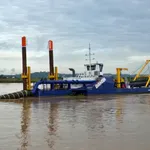
Damen - Wijtze van der Leij, Sales Manager Offshore Wind – will cover the Damen’s successful track record on electric vessels following the launch of the all-electric Tug ‘Sparky’. Learn about Damen’s latest developments, the challenges, and the future roadmap for electric propulsion.
Chartwell Marine – Christophe Rident, Senior Naval Architect – will examine cost efficient routes to emissions reduction for Fast Ferries, transitioning from traditional diesel powered vessels. Christophe stated “While operators exhibit a strong interest in transitioning to full electric, the need to integrate with existing shoreside grid infrastructure, (which they usually do not own) often hinders progress” said Christophe Rident, Senior Naval Architect at Chartwell Marine