World’s first battery electric methanol tug ordered
October 3, 2024By Seawork Press FP
UZMAR Shipyard
Svitzer Marine
Share this article
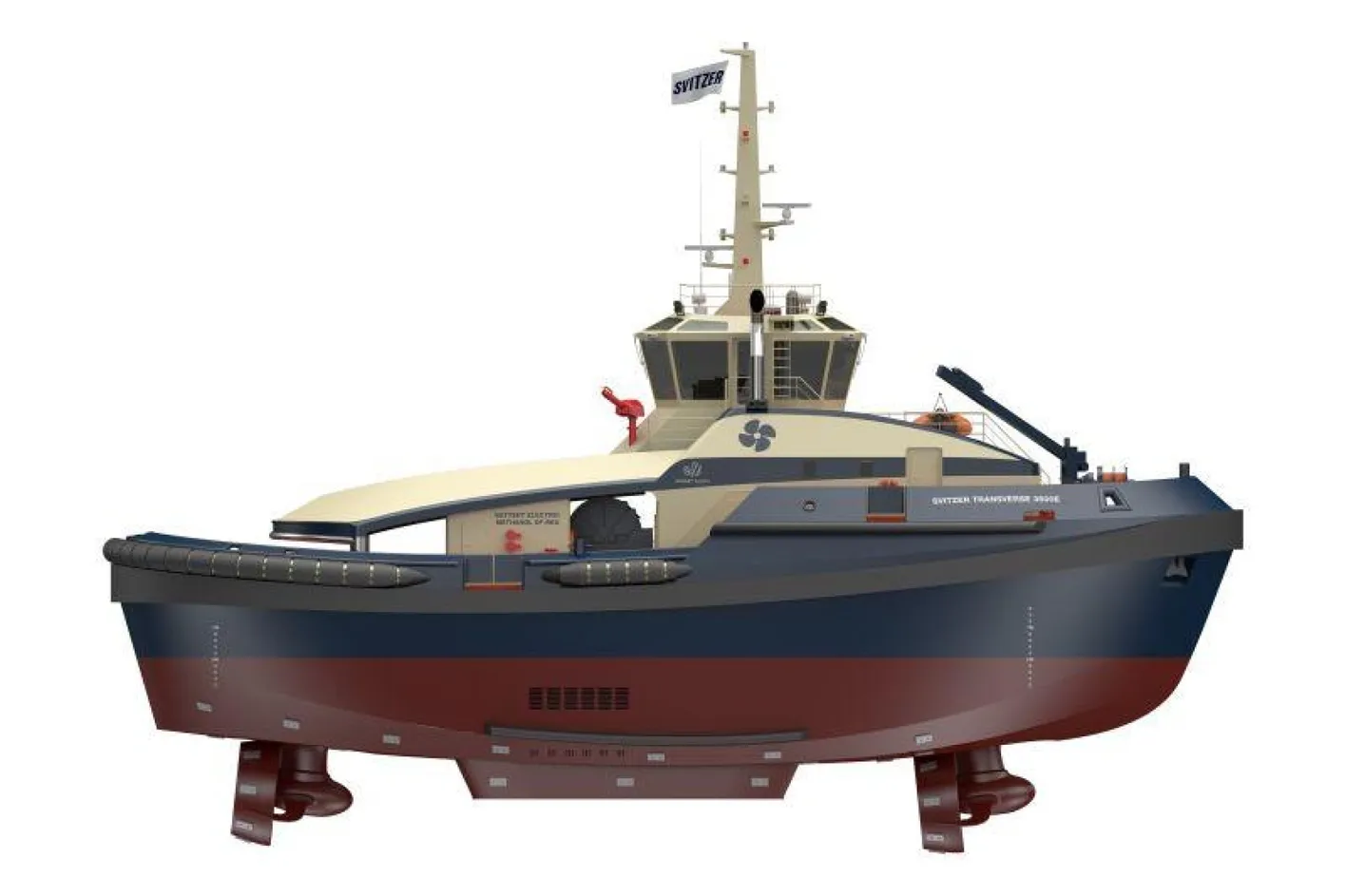
Towage provider Svitzer has contracted Turkish shipyard UZMAR to build a world-first methanol-battery tug for delivery in H2 2025.
The 6MWh battery-powered tug will be deployed in Gothenburg and provide zero-emission services across a quarter of Svitzer’s operations in the port.
The tug will be based on Svitzer’s innovative TRAnsverse tug design and feature a 6MWh battery supported by dual fuel methanol engines for back-up and range extension. It is expected that more than 80% of its operations will be conducted using its battery-electric powertrain.
Designed in collaboration with naval architect, Robert Allan Ltd, the tug will feature an overall length of 34.9 meters, providing substantial stability and capacity. It will deliver an impressive bollard pull ahead of 85 tonnes and utilise escort steering and braking forces rated at 150 and 200 tonnes, respectively, measured at 10 knots. With a gross tonnage of approximately 806 tonnes and powered by a 6MWh battery system, the tug will be capable of achieving speeds of up to 14 knots.
Continuing developments in alternative power technologies convinced Svitzer that the combination of battery power and methanol engines can ensure both safe, efficient and reliable operations in a location with the right availability of these two power sources. With an aim to become the world’s most sustainable port, the Port of Gothenburg was considered the perfect location for the new tug. The port is making significant investments to provide the necessary shore power charging options, and methanol is already being bunkered at the port. As such, Gothenburg has all the ingredients for safe and stable operation of the tug for many years to come.
Gareth Prowse, Head of Decarbonisation at Svitzer, commented on the contract, “The launch of a first-of-its-kind newbuild project with our partners at UZMAR Shipyard is a significant milestone for our decarbonisation ambitions. We are proud of the work we have done with our technology suppliers and engineering consultants to develop the tug to this point. The battery electric tug will mean we can deliver our services to customers in the Port of Gothenburg with significantly lower carbon emissions, and still to the highest operational and safety standards.”
Kasper Nilaus, CEO of Svitzer, said, “Applications for battery solutions are expanding at an unanticipated pace, and we see it becoming an important power option in the sustainability transition. This battery tug will bring a new dynamic to our operations. There will not be a one-size-fits-all solution for us to meet our ambitious decarbonisation targets, and equipped with this new power technology we have yet another option for how to significantly reduce emissions across the many global ports and terminals we operate in. In this way, we continue to develop our strategies for fleet-wide decarbonisation while constantly ensuring safe, reliable marine services to Svitzer customers.”
A. Noyan Altug, CEO of Uzmar, commented, “Our close working partnership with Svitzer on planning and developing this newbuild project will see our shipyard deliver one of the most advanced tugs in the global fleet using new technologies and specifications. At Uzmar, we recognise the importance of reducing carbon emissions in the maritime sector, and we are fully aligned with Svitzer’s ambitious decarbonisation strategy. This project represents a significant step forward in that journey. By integrating cutting-edge technologies and sustainable practices, we are not just building a tug; we are helping to shape the future of green maritime operations. For Svitzer, our expert team will continue to deliver sustainable building excellence.”