
Sponsor Banner

CAREERS & TRAINING

Text editor image

MARINE SURVEYOR


Here you will find information on becoming a Marine Surveyor, follow the links for information on becoming a naval architect or boatbuilder.

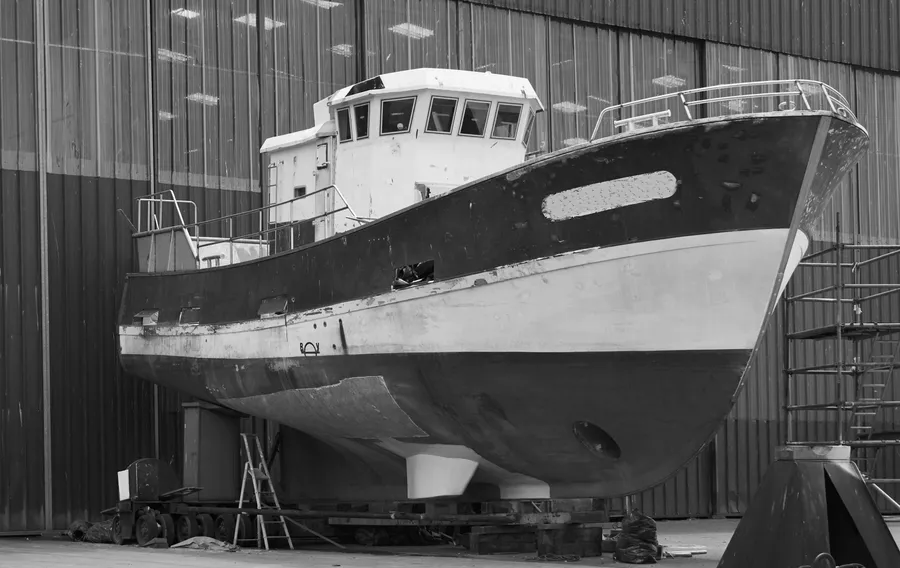
Marine surveyors survey everything from small craft to commercial ships, tugs, trawlers and dredgers of varying types and sizes. 

A marine surveyor’s job is essential to ensure that the vessel is fit for purpose and is in a suitable and seaworthy condition. 

Marine surveyors can be self-employed, employed by specialist Surveying companies, insurance companies and organisations. The Maritime and Coastguard Agency employ marine surveyors to inspect vessels to ensure they comply with regulations and are safe to go to sea.

Qualifications and Training

Surveyors are not required to be licensed or qualified, hence standards vary in the industry. 

To work for large companies and undertake insurance work, it is advisable to have marine surveying qualifications like a Diploma.

Most marine surveyors have a senior school education to include two or three A-levels in appropriate science subjects, a Level 3 Diploma qualification or an equivalent. Some experience of the marine environment, either leisure or commercial would be an advantage.

Some marine surveyors complete formal apprenticeships that combine classroom instruction and paid on the job training.


Salary Brackets
A Marine Surveyor working in the commercial sector in the UK earns an AVERAGE of £39,403.00 per year based on a range of £25,216 – £65,614. (Source: Maritime Training Academy)


Colleges/Universities

Marine Surveying Academy
https://marinesurveyingacademy.com/about-msa/professional-qualifications-in-marine-surveying/

Lloyd’s Maritime Academy
https://informaconnect.com/certificate-in-essentials-of-marine-surveying/

Text editor image

 GOOD TO KNOW

There are many different types of surveys undertaken on vessels including

Valuation Surveys, Damage Surveys, Safety & Operational Surveys, Surveying Rigs & Sails, Hull Surveys, Incident & Accident Investigation, Corrosion Surveys and Surveying Engines & Ship Systems

Intermediate apprenticeships
Intermediate apprenticeships are the entry-level apprenticeship for those looking to make a start in the world of work. Available to anyone from the age of 16, with no maximum age limit, they’re also a great option for anyone looking to make a career change. You’ll need five GCSEs grade A*-E/ 3-9 including Maths and English, as well as a Science subject to apply for an engineering or technical role, or two National 4s including Maths and English (or equivalent).
Advanced apprenticeships
You can apply for an advanced apprenticeship if you have five GCSEs or National 4 (or equivalent), including Maths and English, as well as a Science subject to apply for an engineering or technical role, or you’ve completed an intermediate apprenticeship or similar Level 2 qualification. They’re full-time roles, with a competitive salary and they’re a great way to develop specialist skills.
Higher apprenticeships
Higher apprenticeships are available to anyone over the age of 18 who is looking for an alternative to attending university. You’ll need at least five GCSEs or National 5 + Highers (or equivalent) including Maths and English, as well as a Science subject to apply for an engineering or technical role. Additionally, you’ll require a minimum of two A levels or a level 3 equivalent qualification.
Degree apprenticeships
Degree apprenticeships are great for 18–19-year-old school leavers looking to gain a degree while also starting their career journey. It’s the perfect option for those who can’t decide between an apprenticeship and university. They’re also a great option for anyone looking to make a career change.

SEAWORK 2026 DATES & TIMES
09:30 - 17:30 Tuesday 9 June 2026
09:30 - 17:30 Wednesday 10 June 2026
09:30 - 16:00 Thursday 11 June 2026

SEAWORK 2027 DATES
Tuesday 15 June 2027
Wednesday 16 June 2027
Thursday 17 June 2027