‘New venture a great win for autonomous maritime technology’
April 14, 2025By Seawork Press FP
Speed@Seawork
Hefring Marine
Marine AI
Share this article
What happens when a leader in intelligent marine technology and a pioneer in autonomous vessel control systems get together?
Hefring Marine and Marine AI have joined forces with the aim of enhancing autonomous maritime operations by integrating Hefring’s Intelligent Marine Assistance System (IMAS) with Marine AI’s GuardianAI autonomy suite.
IMAS leverages AI technology, sensor data, and edge computing to deliver actionable insights, improving vessel efficiency, reducing fuel consumption, and enhancing onboard safety. GuardianAI is a modular, state-of-the-art autonomous vessel control system capable of IMO Level 4+ autonomy, enabling high-fidelity situational awareness, tactical path routing, and intelligent vessel control.
“Our new venture with Marine AI is a great win for autonomous maritime technology,” said Karl Birgir Björnsson, CEO of Hefring Marine. “By integrating IMAS with GuardianAI, we are enabling vessels to operate more efficiently, safely, and with greater situational awareness. This partnership is a testament to our commitment to enhancing fleet intelligence and optimizing maritime operations.”
“The synergy between GuardianAI and IMAS will redefine how autonomous vessels interact with their environments,” said Tom Rooney, general manager of Marine AI. “IMAS acts as the ‘human feel’ in an autonomous setting, allowing vessels to respond dynamically to real-time conditions. This partnership enables a holistic approach to autonomy, ensuring both crewed and uncrewed vessels can navigate safely and efficiently.”
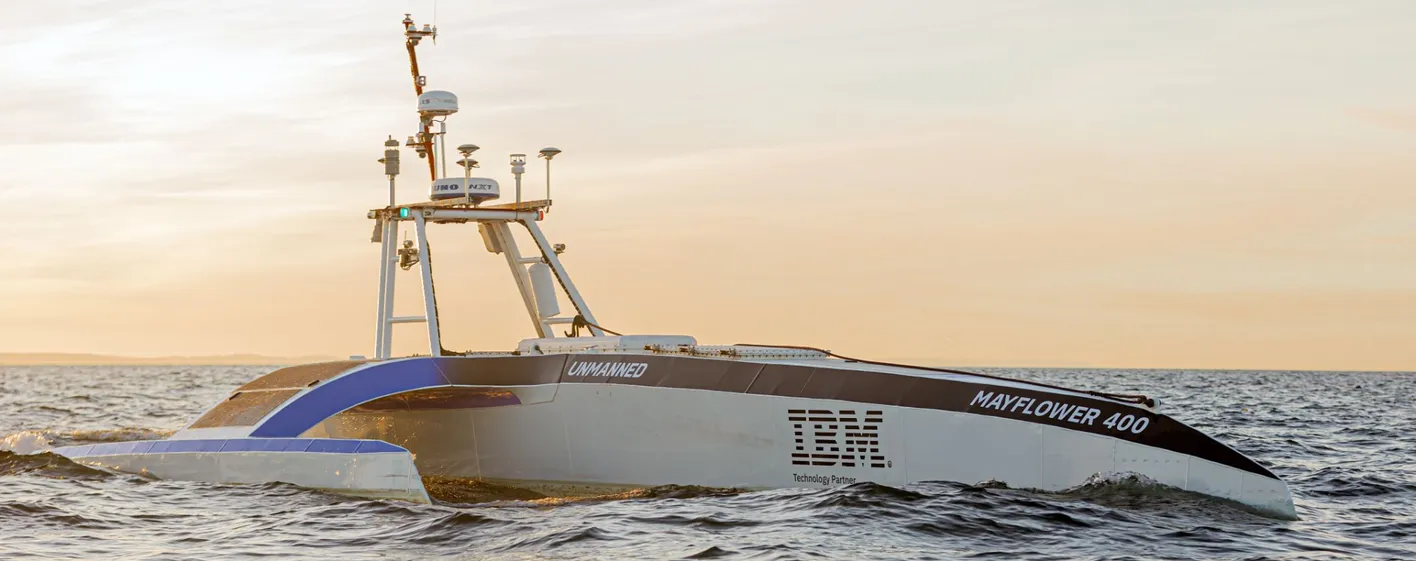
The software used by Mayflower Autonomous Ship for her successful transatlantic voyage was produced and supported by Marine AI, and the latest generation of this same software is being used by sister company Zero USV, the Royal Navy and a growing number of commercial and defence customers.
Future plans include ongoing joint product development and system enhancements to expand the capabilities of autonomous vessel operations. The scalable nature of this technology means it can be applied across a broad spectrum of vessel types, from small uncrewed autonomous vessels to large passenger ships.
For a longer read, take a look at Jake Frith's feature on the new collaboration for Maritime Journal here