All aboard for The Journey to Net Zero
The 2nd session in a series of clean maritime-themed webinars organised by SMI in partnership with Seawork will be held on 4 April from 1000-1100 BST and will focus on The Journey to Net Zero - Vessel Integration.
In April 2018, IMO members agreed on a target to cut the shipping sector's overall CO2 output by 50 percent by 2050 compared to 2008. Whilst much focus to date has been on the individual technologies and fuel debates, in order to meet the IMO targets the solutions will need to be integrated into the vessels. This vessel integration will require consideration of the challenges throughout the lifecycle of the vessels; from design and build right the way through to disposal. For the maritime industry to reach its 2050 targets and continue to manufacture ships for the future, it is imperative that all lifecycle phases are considered and that the embodied carbon is accounted for, allowing the correct equipment selection to be made.
The short webinar series focusses on improved vessel efficiency and sustainability in the run-up to the Seawork exhibition in June. Delivered by leading experts from industry and academia, the series will cover topics such as the impact of the new regulations and guidance, vessel integration and underwater radiated noise.
This session will provide examples of recent ship integration challenges as well as outlining the tools and decision processes required to understand the impact of the different options.
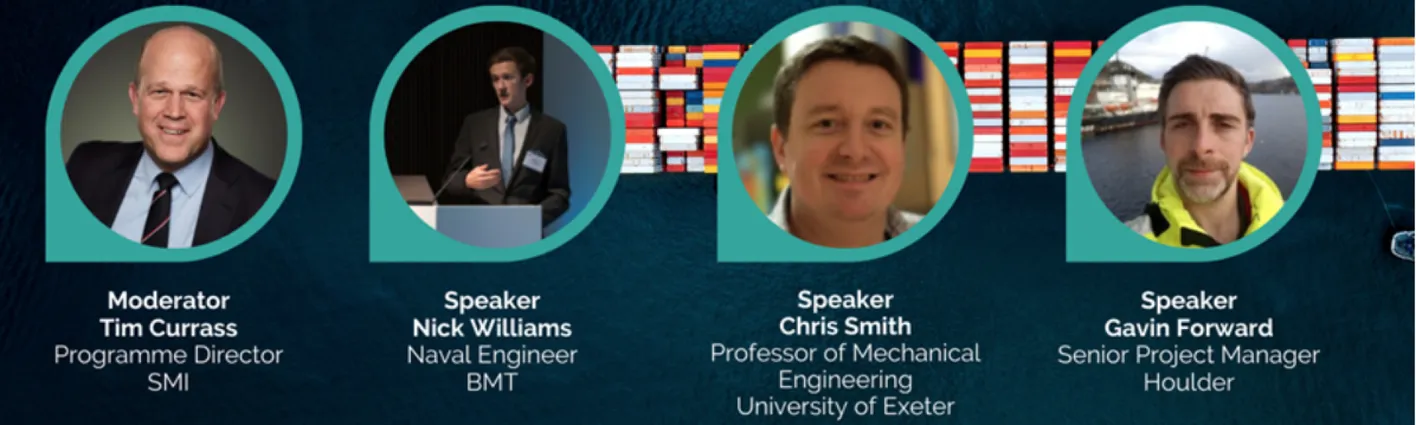
Joining moderator - Tim Currass, Programme Director for SMI, are expert speakers:
Nick Williams Naval Engineer, BMT
Chris Smith, Professor of Mechanical Engineering, University of Exeter
Gavin Forward, Senior Project Manager, Houlder
Click the link to register for this free online session - The Journey to Net Zero - Improved Vessel Efficiency & Sustainability – Webinar 2: Vessel Integration (seawork.com)
In April 2018, IMO members agreed on a target to cut the shipping sector's overall CO2 output by 50 percent by 2050 compared to 2008. Whilst much focus to date has been on the individual technologies and fuel debates, in order to meet the IMO targets the solutions will need to be integrated into the vessels. This vessel integration will require consideration of the challenges throughout the lifecycle of the vessels; from design and build right the way through to disposal. For the maritime industry to reach its 2050 targets and continue to manufacture ships for the future, it is imperative that all lifecycle phases are considered and that the embodied carbon is accounted for, allowing the correct equipment selection to be made.
The short webinar series focusses on improved vessel efficiency and sustainability in the run-up to the Seawork exhibition in June. Delivered by leading experts from industry and academia, the series will cover topics such as the impact of the new regulations and guidance, vessel integration and underwater radiated noise.
This session will provide examples of recent ship integration challenges as well as outlining the tools and decision processes required to understand the impact of the different options.
Joining moderator - Tim Currass, Programme Director for SMI, are expert speakers:
Nick Williams Naval Engineer, BMT
Chris Smith, Professor of Mechanical Engineering, University of Exeter
Gavin Forward, Senior Project Manager, Houlder
Click the link to register for this free online session - The Journey to Net Zero - Improved Vessel Efficiency & Sustainability – Webinar 2: Vessel Integration (seawork.com)
Recommended News for You

And the first entries are in
April 2, 2026Seawork Press FP

San Jose on her way to Guatemala
April 2, 2026Seawork Press FP

See and hear - video shorts from Session 2 of Get Set for Workboat 2050
March 31, 2026Seawork Press FP

Future fuels conundrum: crewing, insurance, funding
March 31, 2026Seawork Press GSFW FP/MJ

Will there be any crew at all? Crew crisis at the heart of discussions
March 31, 2026Seawork Press GSFW FP/MJ