
Loading...
CAREERS & TRAINING
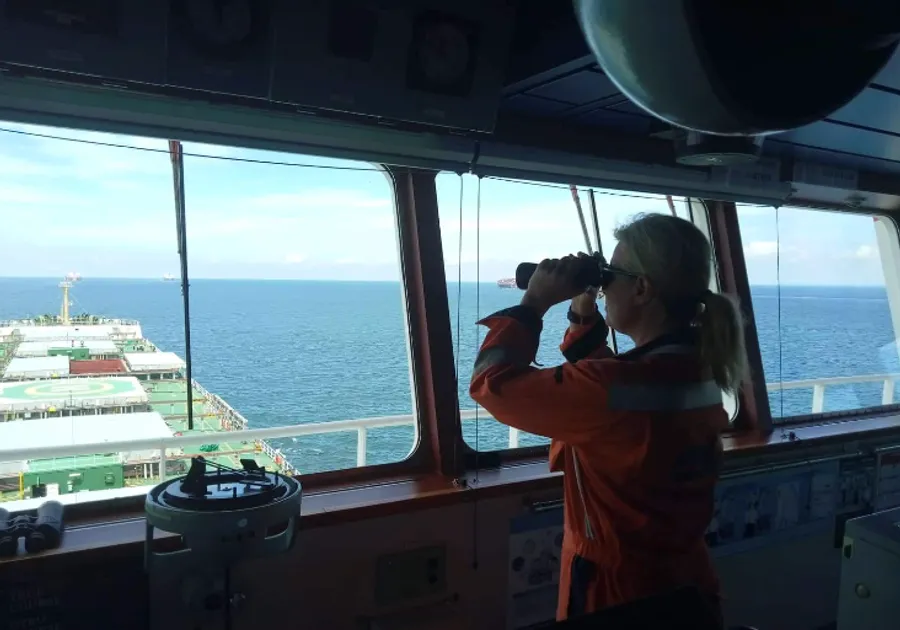
NAVIGATION AND COMMUNICATIONS
Every vessel, large or small, requires a person onboard to ensure that it is going in the right direction, at the right speed and avoiding other vessels, hazards and obstacles. This is the navigator. In smaller vessels, operating near to shore, that person may also be the skipper and rely on their experience alone to navigate the vessel safely.
On larger vessels that person will have gained qualifications and experience in the role. Find out more here or follow the link to Communications to find out about becoming part of the teams that undertake marine communications, at sea and on shore.
Roles
A Navigation Officer is a vital member of a vessel's management team - responsible for making decisions on steering and manoeuvring the ship, controlling navigation and communications.
Qualifications and Training
There are many ways to become involved in the navigation of a vessel. As with many maritime careers the qualifications you require will depend on the size and type of vessel you are navigating.
Both the Royal and Merchant Navy have exciting opportunities for learning to be a navigator.
In the Royal Navy you can enter as a Seaman Specialist and go on to learn about navigating Royal Navy vessels. You don’t need any qualifications, just to be over 16 and able to pass the Naval Swimming test.
If you graduated from university, or did well at school, you could undertake Naval Officer training. Officers are the managers and leaders of the Royal Navy and navigation will be an important part of your training.
The Merchant Navy offers opportunities as a Deck Rating or as a Navigation (Deck) Officer. There is no minimum academic standard for entering the industry as a Rating, but if you do an apprenticeship or traineeship some companies may ask to see a minimum of three GCSEs or Scottish standard grades. To begin a career at sea you will be required to pass a Seafarer Medical Certificate and complete basic STCW certificates (short course safety training) for each role.
Becoming a Navigation (Deck) Officer involves a mix of college – or university – based study and onboard training. The amount of time you spend on each depends on which role you’re going for and which course you take.
You could do an HNC or HND (3 – 3.5 years), a foundation degree or professional diploma in Scotland (3 years) or an honours degree (4 years) course.
Whichever route you take and whichever course you do, you’ll get a professional seafaring certificate. This is the Officer of the Watch Certificate, which means you are qualified to work on board any merchant ship anywhere in the world.
If you are working on small vessels or workboats, you may be able to train and learn as you work. Before taking a job it’s important to find out how much time you will be allowed for your training.
Salary Brackets
Royal Navy £21,000 - £54,000 The Merchant Navy depends on qualifications, experience and size of vessel but could be between £25,000 and £80,000
Colleges/Universities
Royal Navy
https://www.royalnavy.mod.uk/careers/roles/seaman-specialist
Merchant Navy
https://www.careersatsea.org/careers/
Warsash Maritime Academy
https://maritime.solent.ac.uk/courses
Fleetwood Nautical Academy
www.fleetwoodnautical.blackpool.ac.uk
City Of Glasgow College
www.cityofglasgowcollege.ac.uk
South Tyneside College
www.stc.ac.uk
Humber Maritime College
https://humbermaritimecollege.ac.uk/courses/