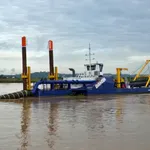
It may be Higher, Faster, Stronger at the Olympics this week but it’s Further, Faster, Safer for AIRCAT as it reaches a critical milestone in the completion of its first vessel.
AIRCAT vessels are revolutionary catamarans that incorporate air cushion technology to enhance speed, comfort and safety, whilst the reduced fuel consumption results in lower CO2 emissions.
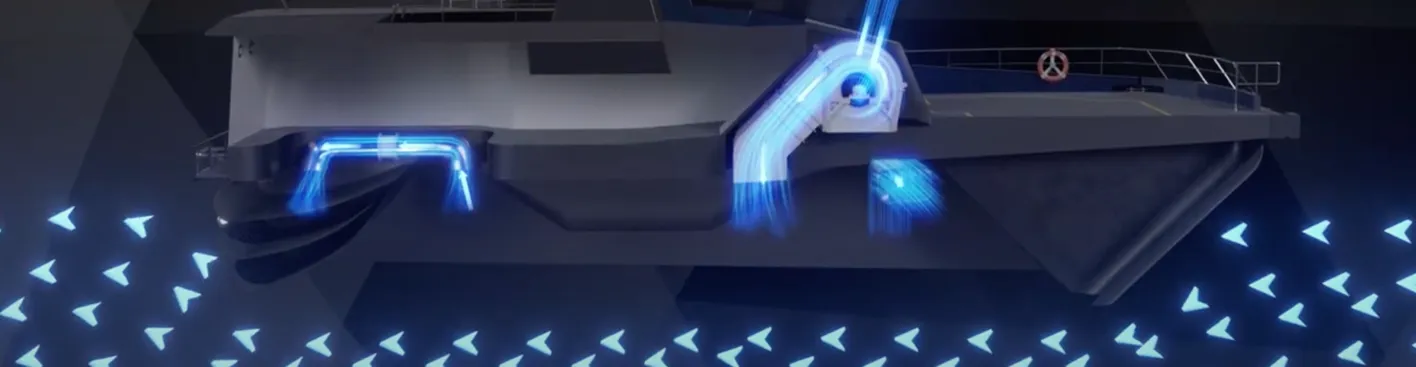
An air blower sends air under the vessel, in-between the airtight zone created by the twin hulls and a reinforced rubber skirt and bag, to form an air cushion which lifts the vessel. Actuated dampers are installed around the vessel to regulate the air-cushion pressure.
The air technology has several benefits including reducing drag, which enables AIRCAT vessels to navigate at higher speeds using less fuel than other vessels and making them more economical and eco-friendly. Regulating the air cushion pressure gives a smoother more stable ride, even in challenging conditions, and behaves as an active heave motion damping system during passenger transfers.
The technology is the result of hard work and close collaboration with partner ESNA - Espeland and Skomedal Naval Architects.
During the commissioning of the Aircat 25 WindFarmer, AIRCAT VESSELS and ESNA engineers tested the ship's lift fan systems by gradually increasing the cushion pressure to lift the hull. Happily, the figures matched expectations making the carefully caluclated predictions come true.