Loading...
- INFO
- VISIT
- EXHIBIT
- EXHIBITOR LIST
- WHAT'S ON
- MEDIA
- MARITIME JOURNAL
- Show more
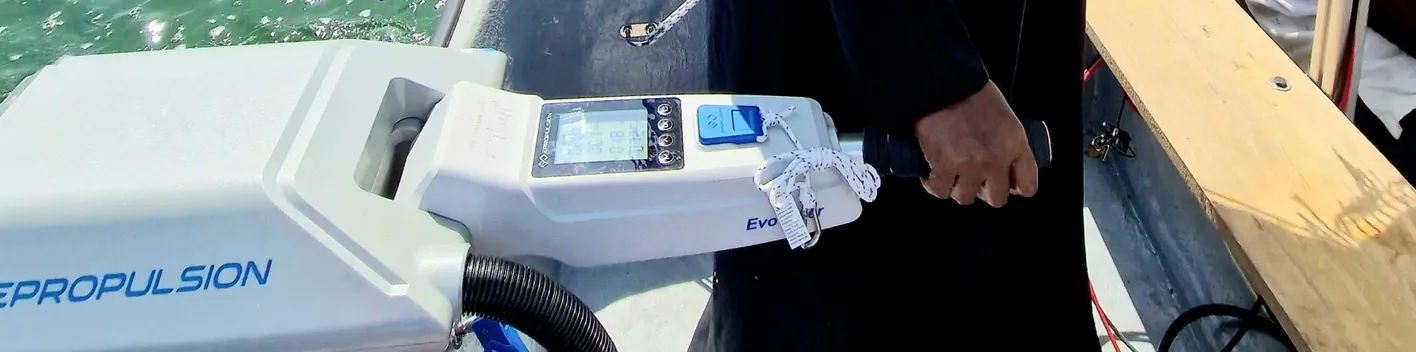
First time exhibitor and integrated marine electric propulsion company, ePropulsion, will be showcasing its I-Series and H-Series range of inboard motors at Seawork this year. ePropulsion’s Navy 3.0 kW outboards have been trialled and adopted onboard vessels serving Zanzibar’s seaweed farms
ePropulsion’s I-Series range of inboard motors are suitable for workboats and vessels between 15’ to 60’ and sit alongside its more powerful H-Series motors. Designed for boats between 60’ to 100’ with a full displacement of up to 200 tonnes, the H-Series inboards are suitable for smaller passenger vessels, commercial fishing boats, pilot boats and barges.
Both systems are designed for OEMs and fleet operators, using ePropulsion’s pioneering permanent magnet motor technology and range of LiFePO4 batteries delivering between 10kW and 250kW of power. Created as modular systems, range and power requirements can be extended by adding motors, controllers and batteries.
ePropulsion’s electric motors are compact units typically 50-60% smaller and lighter than the equivalent diesel engine counterparts, which improves hull and propulsion efficiency, as well as saving space. Fleet operators can also use remote access to monitoring them in real-time, produce customisable data and allow for system management.
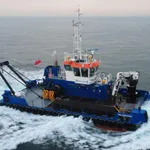
The company recently fitted an H-Series 60kW inboard to a Thames Marine Services workboat on the River Thames in London, UK. The 10.3m vessel 'Albert' has a large passenger cabin and open rear deck and is regularly used for filming, diving and safety work. The vessel’s new electric motor will match the 7kt working speeds achieved with its previous diesel engine.
ePropulsion’s long-range outboard motors and POD drives are regularly used by marina operators, harbour authorities and commercial operators for smaller workboats. As part of the Zanzibar Ministry of Agriculture & Fisheries Blue Economy programme, ePropulsion’s Navy 3.0 kW outboards were recently trialled and adopted onboard vessels servicing the country’s seaweed farms. These environmentally vulnerable sites supply the global pharmaceutical sector and are essential to the local economy.
The project will make many savings in both financial and environmental terms, reducing staffing and fuel and maintenance costs, with recharging taking place primarily via solar panels fitted to the boats. Early-stage calculations indicate that if all 500 boats are converted to electric, over ten years they will avoid 115 tonnes of two-stroke oil and 1625 tonnes of unburnt petrol escaping into the sea and will prevent 11,000 tonnes of carbon dioxide going into the atmosphere.
Steve Bruce, ePropulsion UK MD will be speaking at the Seawork Conference session 1 - Alternative fuels: how operators can make the right choice.
Exhibitor; ePropulsion